Automatic Door Installation, Repair & AODA Compliance
What we service
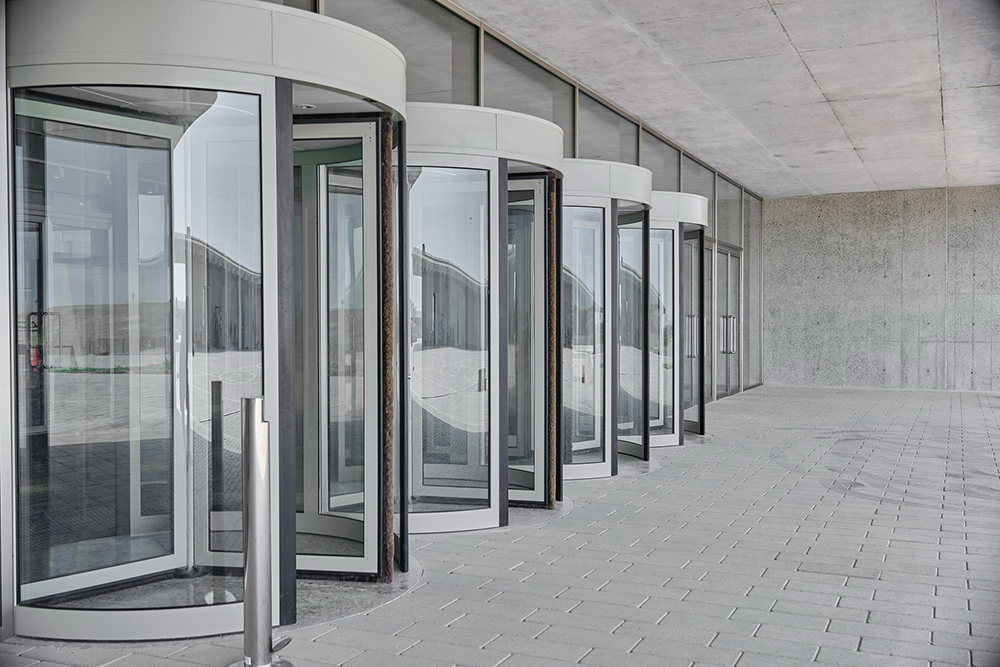
Swing operators, sliding and telescopic doors, full breakout systems, low-energy operators and automatic revolving doors, all installed, serviced and repaired across Ontario and nationally.
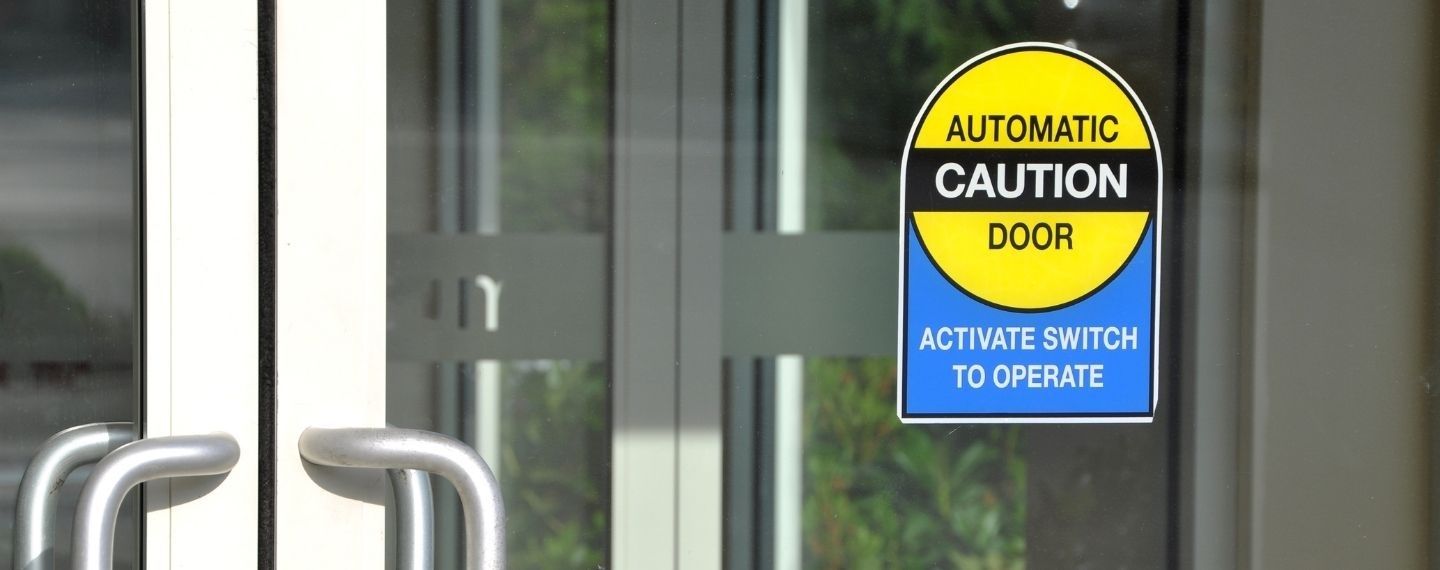
We work on every major make, not a single brand, including Record, Ditec, Hunter and Camden equipment, and we service units we did not install. Our technicians are AAADM certified for automatic door inspection. Activation devices are part of the same job: push plates, wave and touchless sensors, presence detection and the safety sensors that stop a door on an obstruction.
What actually goes wrong
Automatic doors fail in a small number of predictable ways, and most of them are cheaper to catch early than to repair after a breakdown.
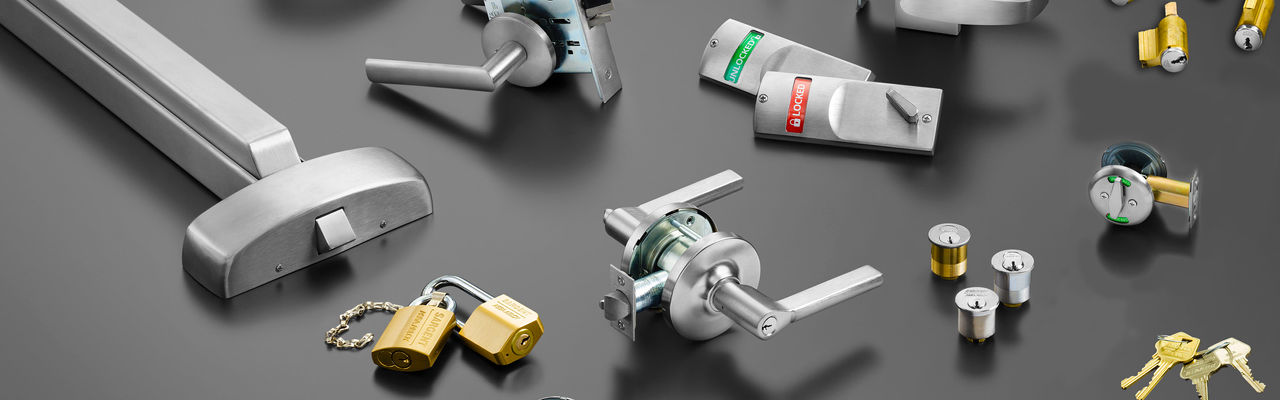
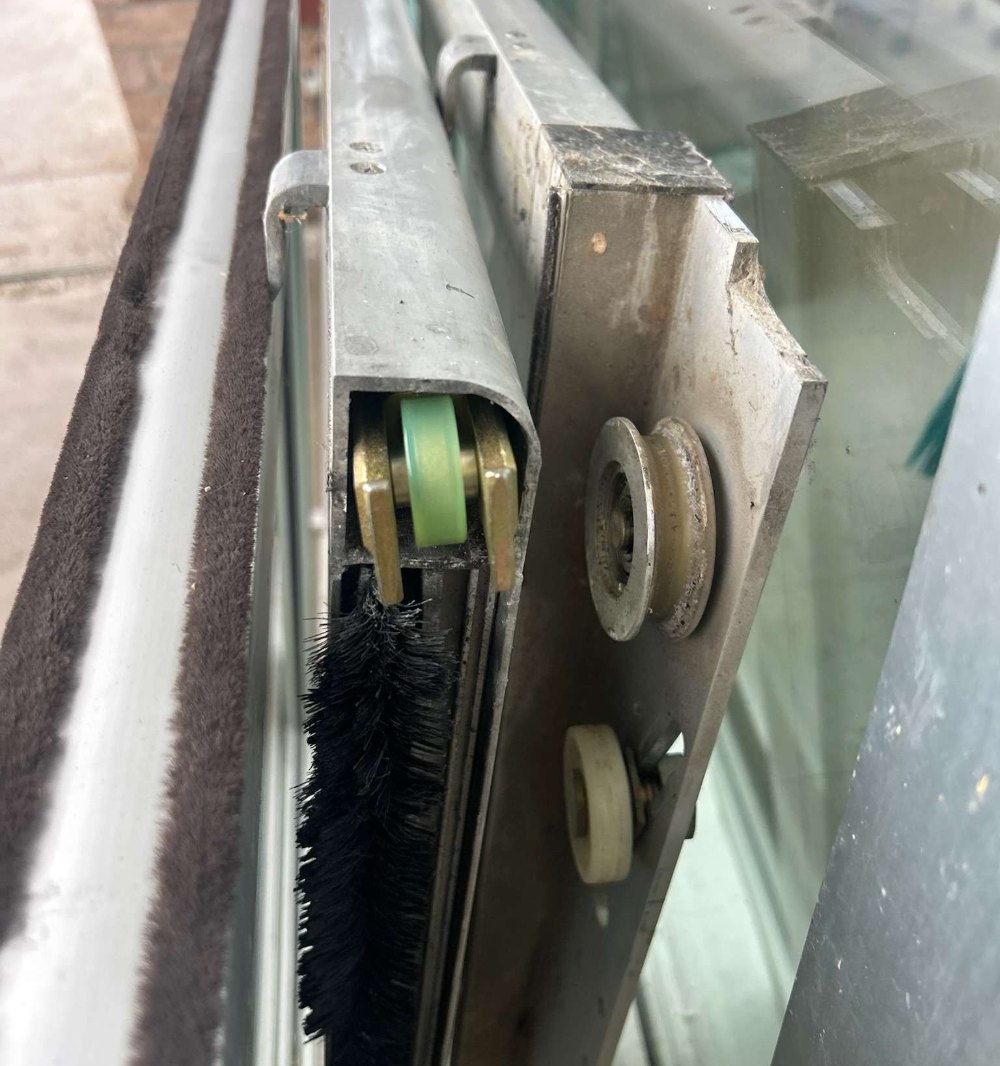
Sensors drift out of alignment, so the door opens late, stays open, or closes on someone. Rollers and carriers wear, which shows up as a grinding slide or a door that drags. Operator arms and belts loosen, leaving swing doors slamming or stalling partway. Controller boards fail, usually after a power event. Breakout hardware seizes, which is a life-safety problem, not an inconvenience, because the door is an emergency exit.
Where the fault is wear and not failure, we quote the repair against the cost of replacing the operator, so you can make an informed decision.
AODA and barrier-free entrances
The Accessibility for Ontarians with Disabilities Act sets accessibility obligations for Ontario organizations, and its Design of Public Spaces standard covers entrances and paths of travel. The Ontario Building Code separately requires power door operators at certain barrier-free entrances in new construction and major renovations.
What that means for an existing building depends on its age, occupancy and what work is being done, so the requirement should be confirmed with your authority having jurisdiction before a project is scoped. What we can tell you is what is achievable: most existing manual entrances can be retrofitted with a low-energy operator without replacing the door or frame, which is usually the least disruptive route to a compliant entrance.
Annual safety inspections
An automatic door is a powered machine that moves in a space occupied by the public. Industry practice, set out by the American Association of Automatic Door Manufacturers, is a daily safety check by the building owner and a documented annual inspection by a certified inspector.
Our technicians are AAADM certified. That means the inspection, the certification label and any corrective work come from the same visit, instead of an inspection firm handing you a list and leaving you to find someone to action it.
The inspection covers sensor coverage and timing, opening and closing force and speed, breakout operation, signage, and the condition of the operator and hardware. You receive the written record, and we correct what the inspection finds.
Maintenance programs for multi-site portfolios
Reactive repair is the expensive way to run automatic doors, because the failures that strand a building are nearly always preventable and nearly always happen outside business hours.
We run scheduled maintenance programs across retail, banking, healthcare and property management portfolios, coordinated through one account contact with the same documentation on every site. Tell us how many entrances you have and where they are, and we will propose a schedule.
Recent work
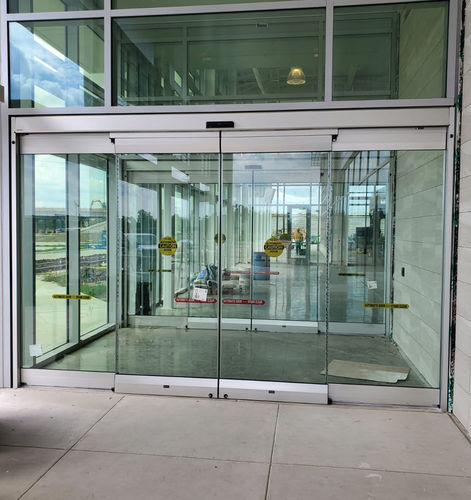
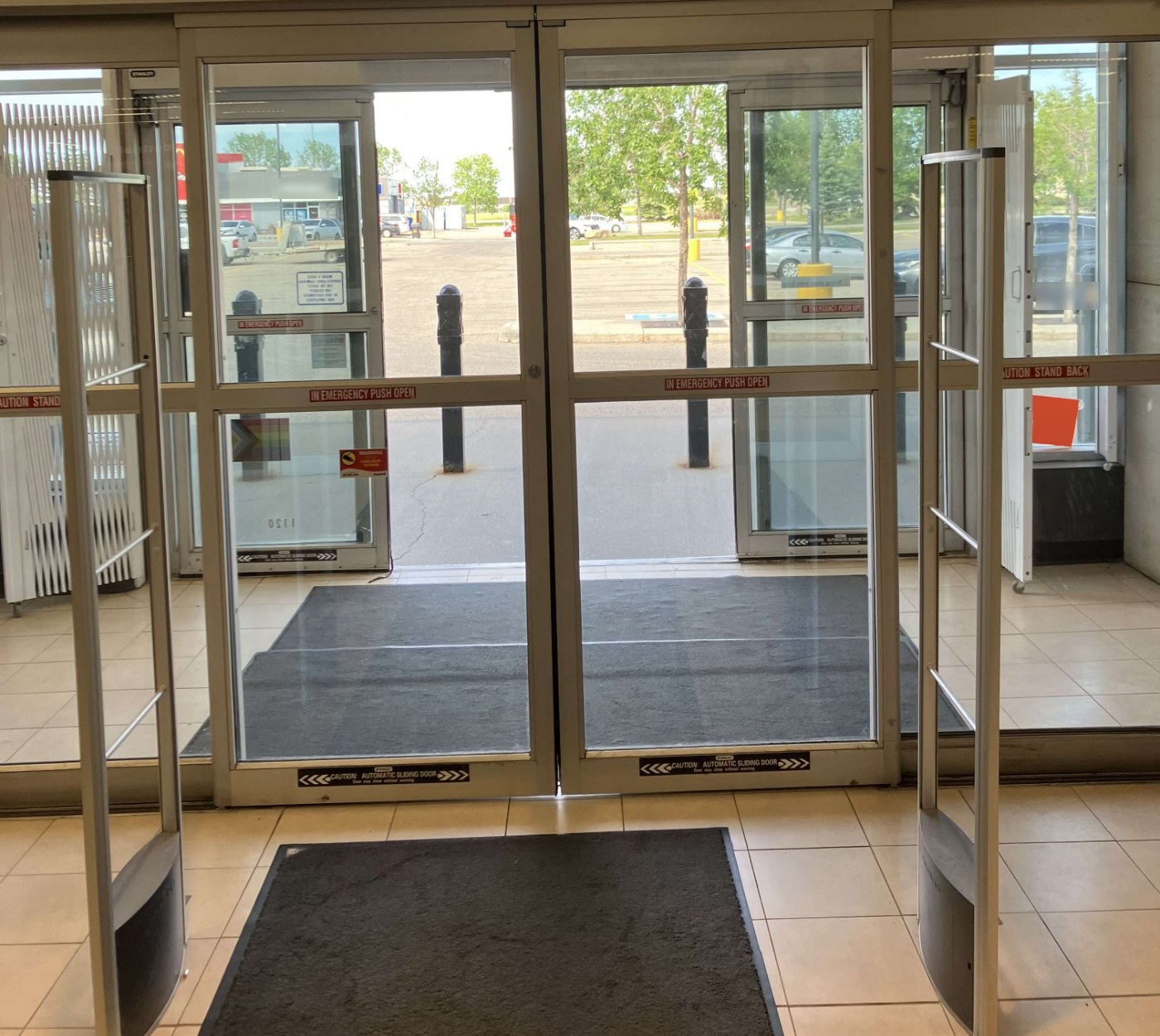
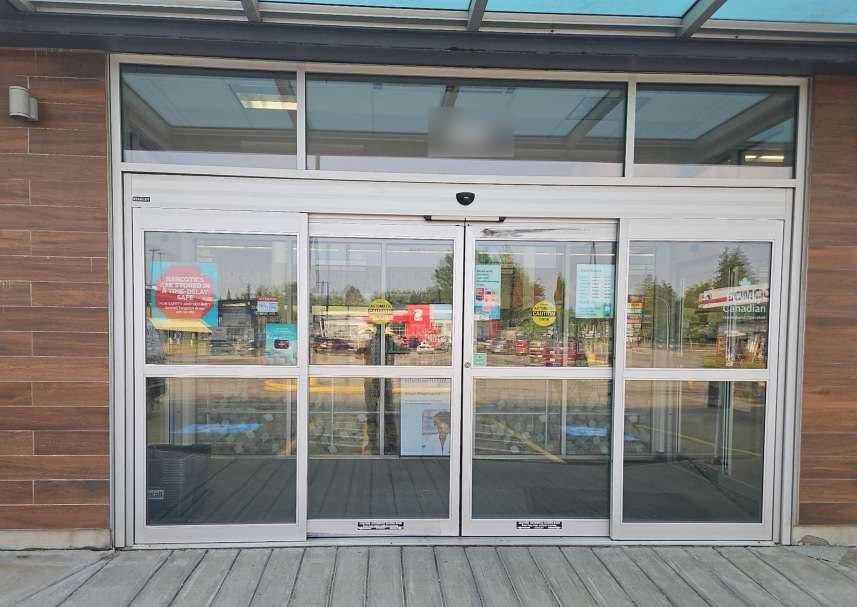
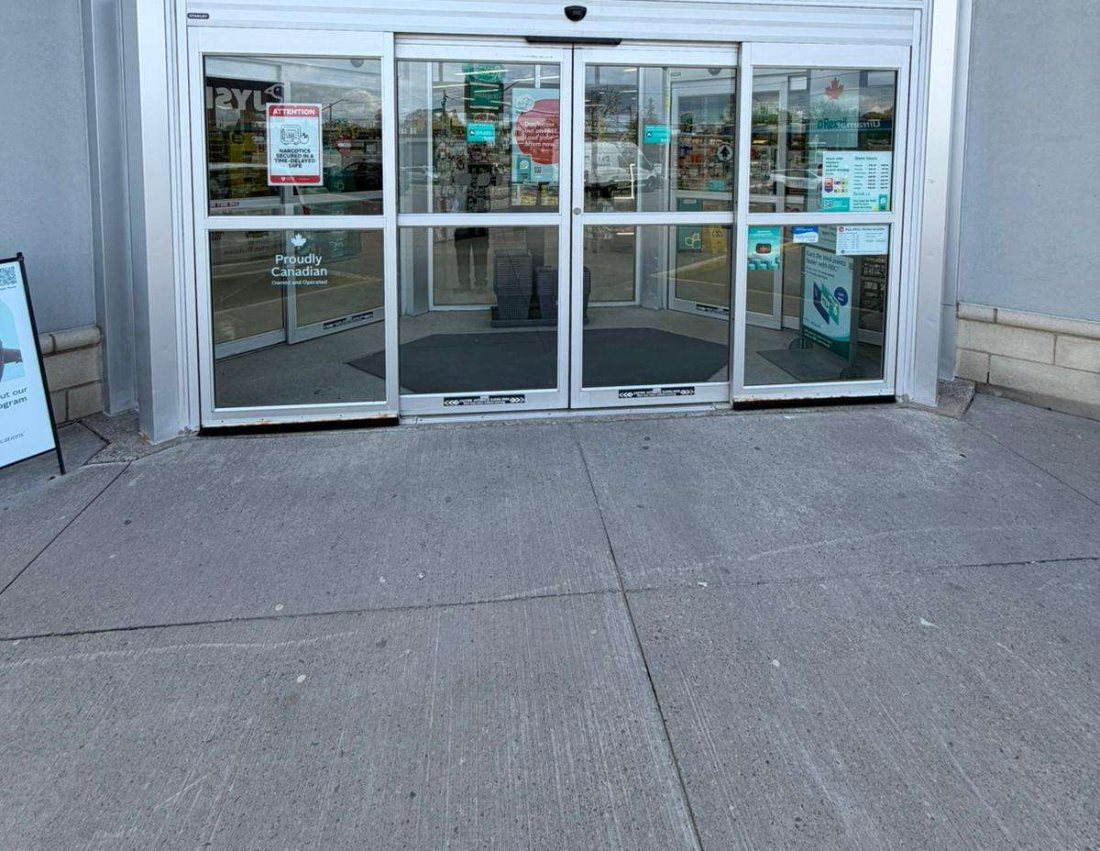
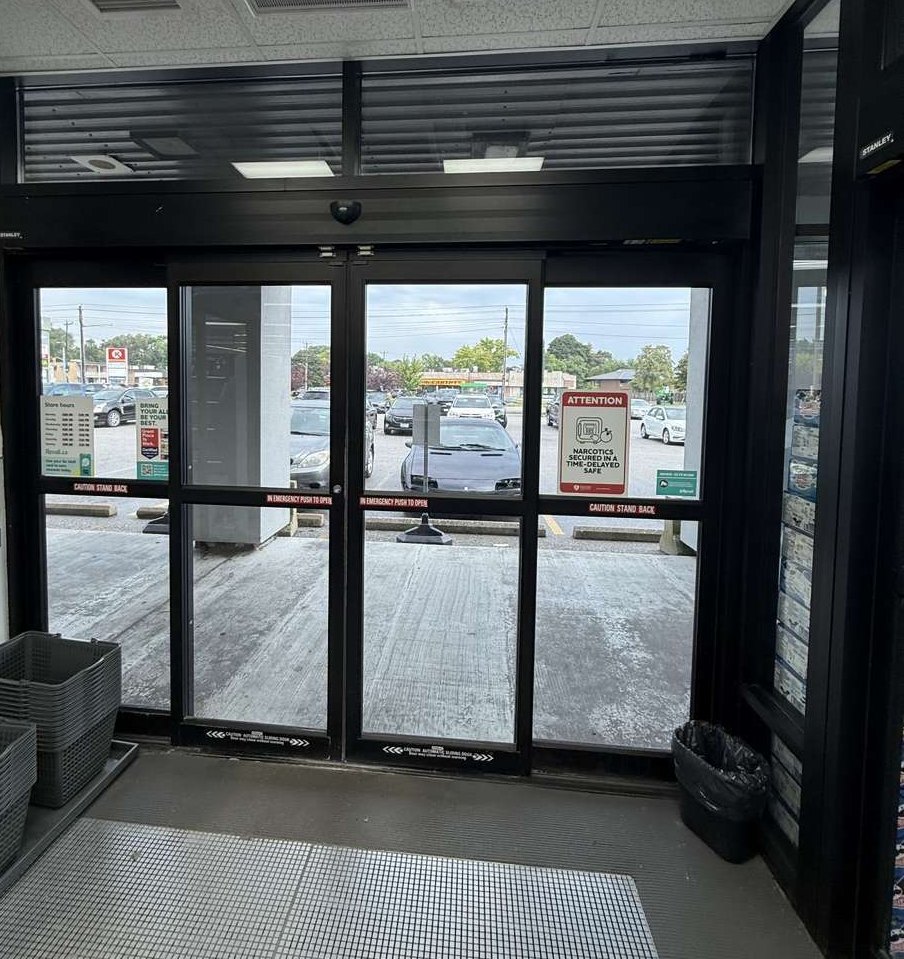
Sliding entrances we service
A roller carriage removed from a sliding door panel.