
There is no single answer to how often a commercial door needs service, because doors do very different amounts of work. Some intervals are set by fire codes and standards. The rest should be set by how hard each door is used.
| Door type | How often | Set by |
|---|---|---|
| Fire-rated doors | Inspected and tested every year by a qualified person. Checked by building staff in between. | National Fire Code of Canada and NFPA 80 |
| Rolling steel fire doors and shutters | Inspected and drop tested every year. | NFPA 80 |
| Exit doors | Checked regularly by building staff to confirm they open freely and are not blocked or locked. | Fire code |
| Automatic sliding and swing doors | Inspected at least once a year, with a daily safety check by building staff. | Recommended under ANSI/BHMA A156.10 and by AAADM |
| Revolving doors | On the schedule the manufacturer sets. Busy main entrances need more frequent visits. | Manufacturer |
| Overhead and high-speed doors | Based on how many times the door cycles. Once a year is a common minimum, and busy dock doors need more. | Manufacturer |
| Non-rated swing doors and hardware | No fixed interval in code. Set by traffic and by how critical the opening is. | Good practice |
Fire doors are the one group with a firm requirement. Fire codes based on the National Fire Code of Canada call for doors in fire separations to be inspected and tested every year by a qualified person, following NFPA 80. Between those inspections, building staff are expected to confirm that fire doors close, latch and stay closed, and that nothing blocks or wedges them open.
Each province adopts its own edition of the fire code, and the details differ. Your local fire department can confirm what applies to your building. Our fire door inspection page explains what the annual inspection covers.
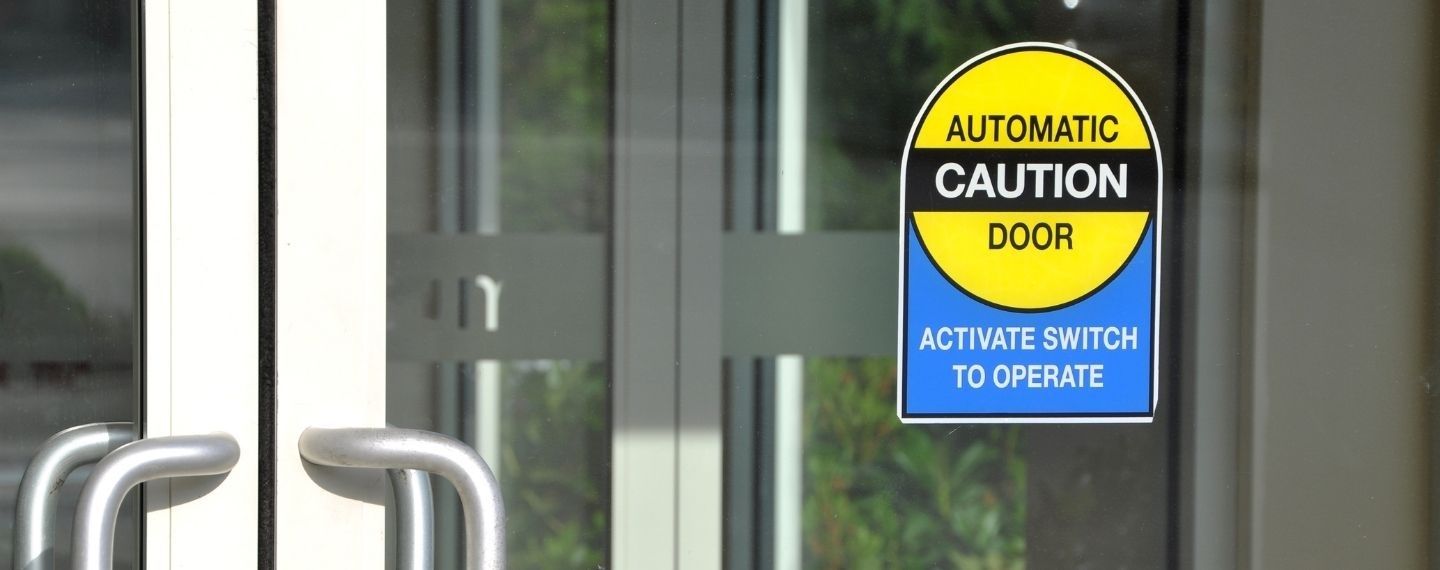
The standard for automatic pedestrian doors, ANSI/BHMA A156.10, says these doors need periodic maintenance and inspection. It recommends an inspection when the door is installed and at least once a year after that. The industry association, AAADM, also asks building staff to carry out a short safety check each day: walk through the door, confirm the sensors see you, and confirm the door does not close on a person standing in the opening.
An annual inspection is a recommendation, not a legal requirement in most places. It is still the clearest evidence an owner can have that a door was maintained properly if someone is ever hurt. See automatic doors for the service we provide.
These doors wear by the cycle, so the calendar is a poor guide. A dock door at a distribution centre can cycle more in a week than an office service door does in a year. Manufacturers publish service schedules for their products, and those schedules should be treated as a minimum.
Deferred maintenance is most expensive on these doors, because one worn part loads the others. We cover this in more detail on our revolving doors and overhead doors pages.
No code sets an interval for a non-rated office or storefront door. The practical approach is to group doors by traffic:
Any of these is worth a service call before the next scheduled visit.
For multiple sites, start with a list of openings at each building, sorted by type and traffic. Fire-rated and automatic doors go on an annual cycle at minimum. Everything else is scheduled by use. A preventive maintenance program puts all of it on one calendar and one report.
This guide is general information. Building and fire codes vary by province and by building, and the authority having jurisdiction has the final say.