Commercial locksmithing is not residential work done on a bigger door. A key that opens the wrong office is a security incident; a key system that nobody documented is a liability that grows every time someone leaves the company.
We have been cutting keys and servicing locks since 1971, and today that work runs across national retail, banking, institutional and multi-site property portfolios. Licensed and bonded technicians, mobile service, and key records that are maintained, not remembered.
Master key systems and key control
A master key system is a design exercise before it is a hardware exercise. Done properly, it gives each person exactly the access their role requires, expands cleanly when the building changes, and can be audited. Done badly, it produces a drawer of unmarked keys and a building nobody can secure.
System design. New systems built around how the building is actually used, with room to grow, documented from day one.
Rebuilding existing systems. Inherited a building with no records? We survey what is there, map it, and rebuild it into something documented.
Restricted and patented keyways. Keys that cannot be copied at a hardware store, issued only on your authorisation. For most commercial clients this is the single highest-value change available.
Key records and issuance. Who holds which key, when it was issued, and what it opens, kept on record and not left to memory.
Rekeying, cylinders and lock repair
Rekeying. After a departure, a tenant change, a lost key or a break-in. Across a portfolio we can rekey to plan, not door by door, which is both cheaper and less disruptive.
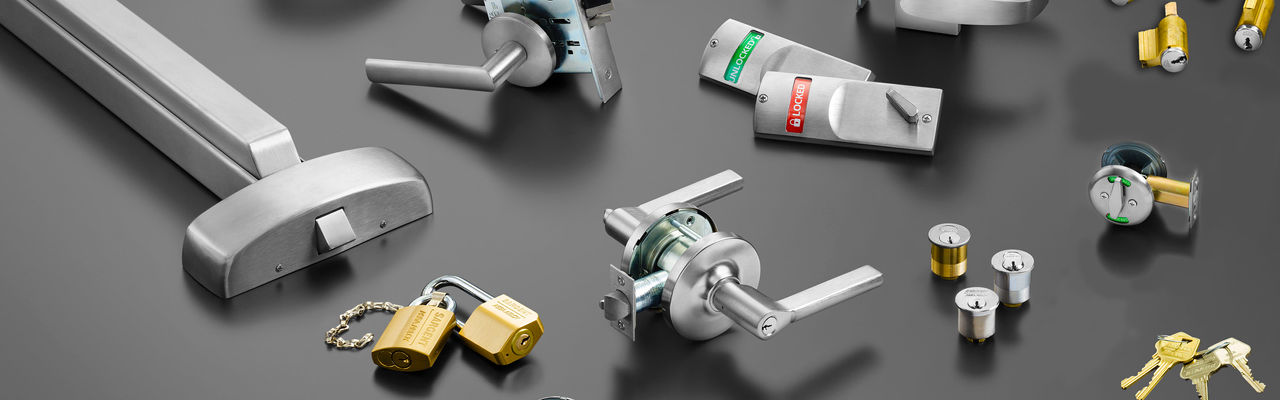
Cylinders. Mortise, rim and key-in-knob cylinders, interchangeable cores, construction keying for sites still under fit-out.
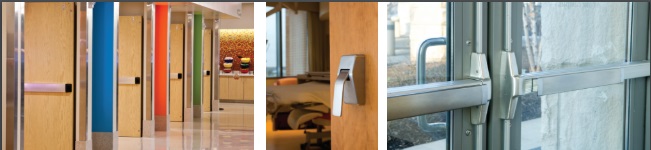
Lock repair and replacement. Mortise locks, cylindrical locksets, exit device trim, deadbolts and auxiliary locks, repaired where repair is honest, replaced where it is not.
Door and frame alignment. Most locks that are blamed for sticking are doing their job on a door that has dropped. We fix the cause, not the symptom.
Lockouts and emergency service
Doors fail at the worst time, which for a commercial building usually means opening or closing. We attend lockouts, failed locks and compromised openings, and where a door cannot be made secure on the visit we say so and secure the opening another way before we leave.
For clients on a service agreement, after-hours work runs through the same dispatch and the same reporting as planned work.
Where keys meet access control
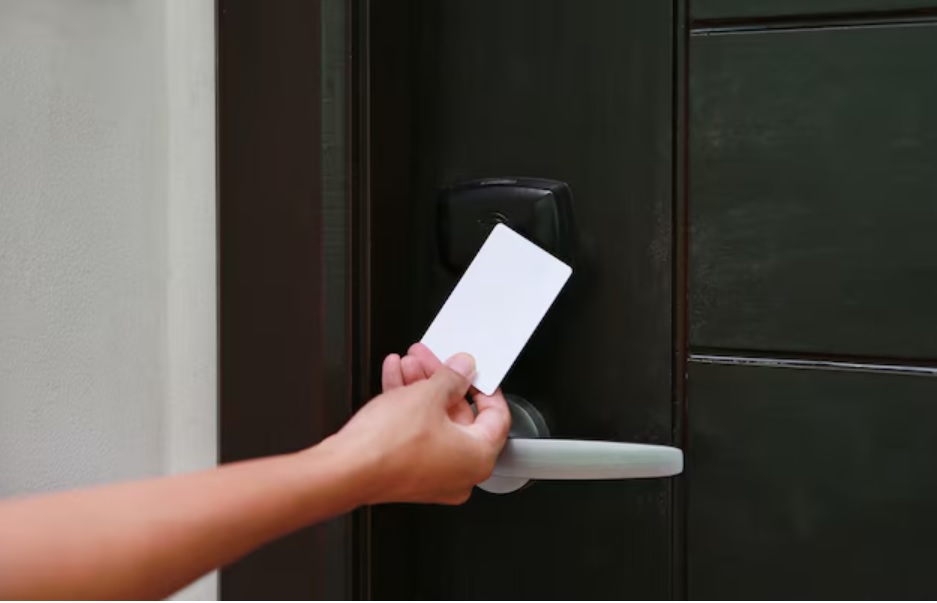
Very few commercial buildings are purely mechanical or purely electronic. Most are a mix: card readers on the perimeter and main circulation, keys on everything else, and a mechanical override on the electronic doors that someone has to be responsible for.
We work on both sides of that line, which matters because the overrides are where the two systems usually fall out of step. Access revoked on a card system means little if the mechanical key that opens the same door is still in circulation.